
Geodesic projector screen: remote development of a buildable folded-sheet 3D screen system
Working from a pre-purchased geodesic frame in Chicago, Frugal developed a remote survey approach, reconstructed the geometry in 3D, and delivered a folded-sheet screen design that the client could manufacture and assemble right first time.
Sprint
Immersive advertising
Remote survey-led
Practical procurement + assembly
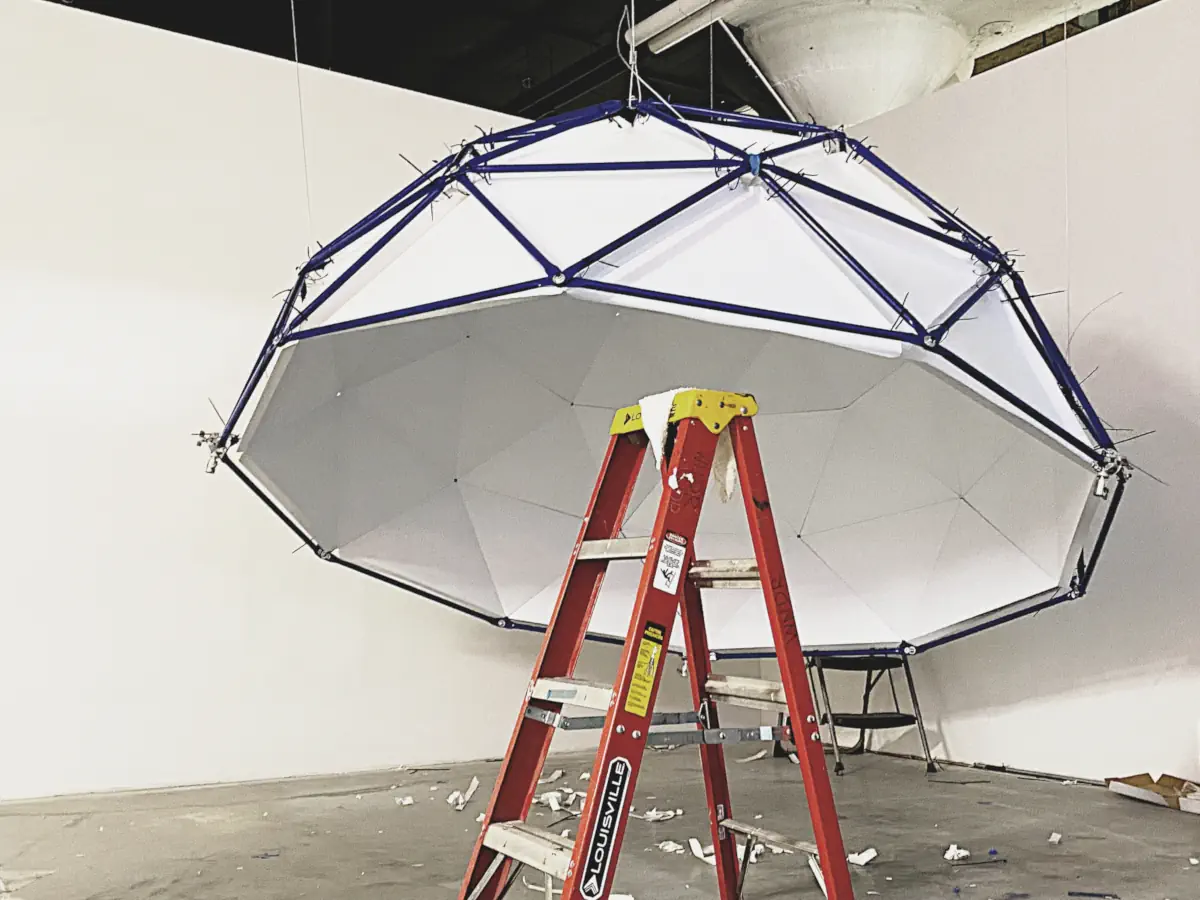
Final screen assembled by the client in Chicago from Frugal’s flat-pattern and assembly outputs.
Situation
The real problem
The difficulty was not the concept, but the lack of dependable dimensional definition for the existing frame. Because the frame was in Chicago and the starting information was not sufficient, I would have to establish a reliable remote-survey approach, decide which minimum key measurements the client would need to take, and develop a screen design that would tolerate survey error and assembly variation at the interface with the geodesic frame.
Because the client also intended to source the parts locally and assemble and fit the screen himself, the design would also have to support a practical build route rather than exist only as an idealised CAD model.
Constraints
-
No dependable design record: Geometry had to be reconstructed from limited remote information.
-
Remote survey only: All geometric definition had to be established with no direct access to the frame.
-
Tolerance at the interface: The design had to absorb likely fit-up variation.
-
Client-led procurement and build: The route had to suit local sourcing and self-managed assembly.
-
One-shot manufacture: The cut files needed to work first time.
Client:
Visual Feeder
Role:
Mechanical engineering consultant
Period:
2021
Scope:
Remote frame survey method +
3D geometric reconstruction +
Folded-sheet screen development +
Supplier-ready cut-file output
Acceptance basis:
Fit to existing frame +
Local manufacture from issued files +
Successful first-time assembly
Key moves
Modelled the frame before measuring it
- Roughed out a first-pass 3D model of the geodesic frame from the client’s photos and assembly instructions.
- Used that model to identify which dimensions actually drove the geometry, so the survey could focus on the few measurements that really mattered.
Validated the geometry with check dimensions
- Updated the model using the client’s key measurements, then predicted a set of secondary check dimensions from it.
- Had the client measure those separately so I could confirm the reconstructed geometry was accurate enough before designing against it.
Designed the screen for fit-up resilience
- Developed the folded polypropylene facets, facet-to-facet joints, and the connection approach between the screen and the steel frame.
- Tested the effect of likely dimensional and assembly variation to check that the screen would still assemble and fit in practice.
Issued build-friendly flat patterns
- Produced 1:1 unfolded flat patterns for CNC profiling, including features to help with identification, positioning, and assembly.
- Exported the final files in SVG format so the client could work easily with them through his chosen local cut-part route.
Selected snapshots
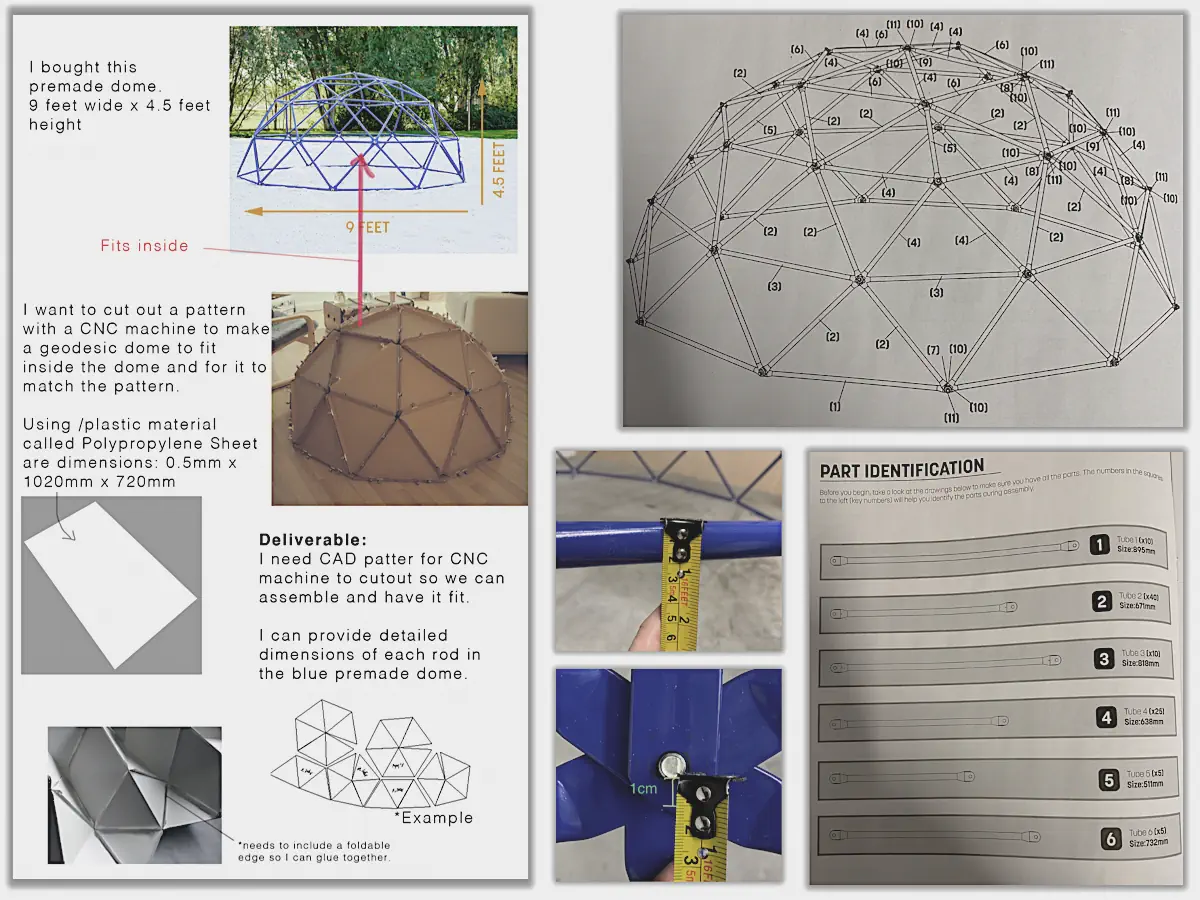
Part of the initial brief received from the client.
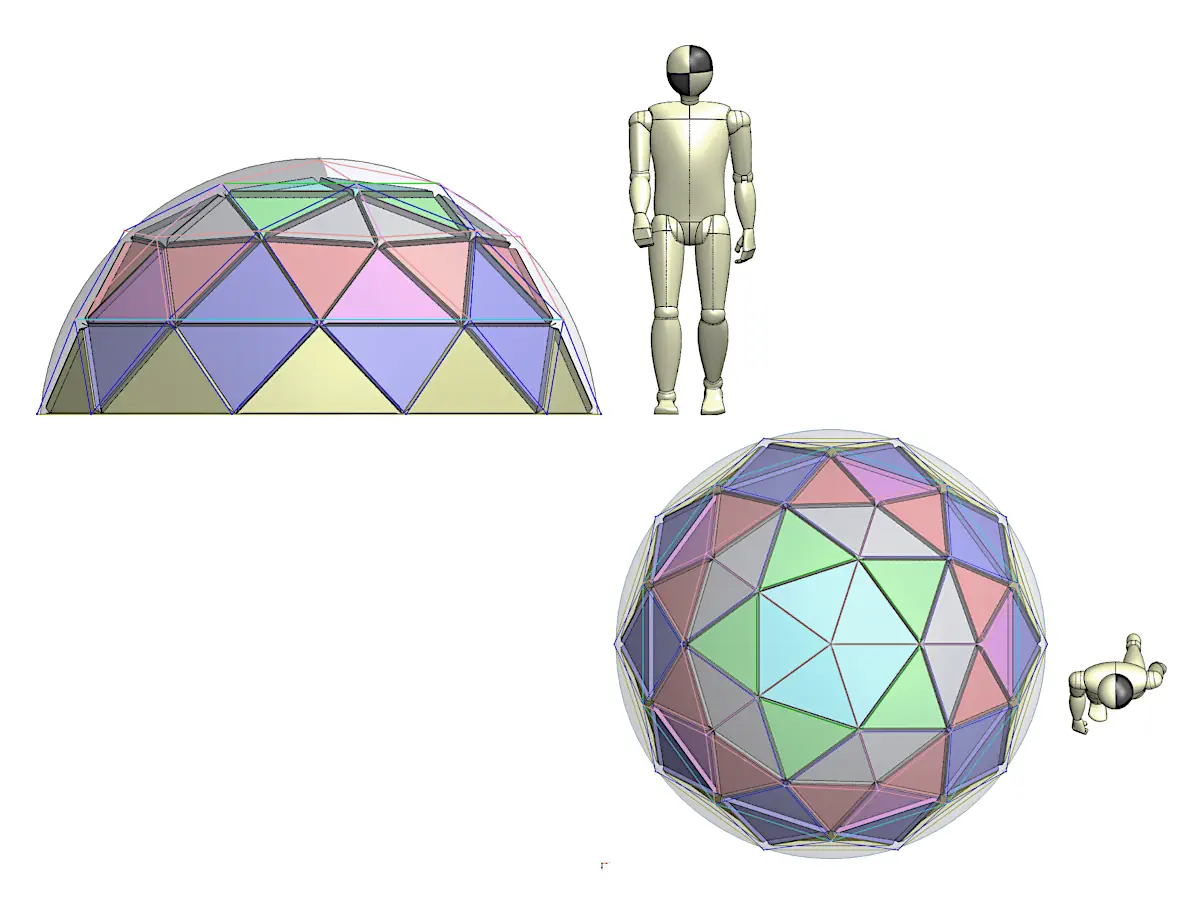
Initial 3D CAD mock-up used to identify the key dimensions for remote survey.
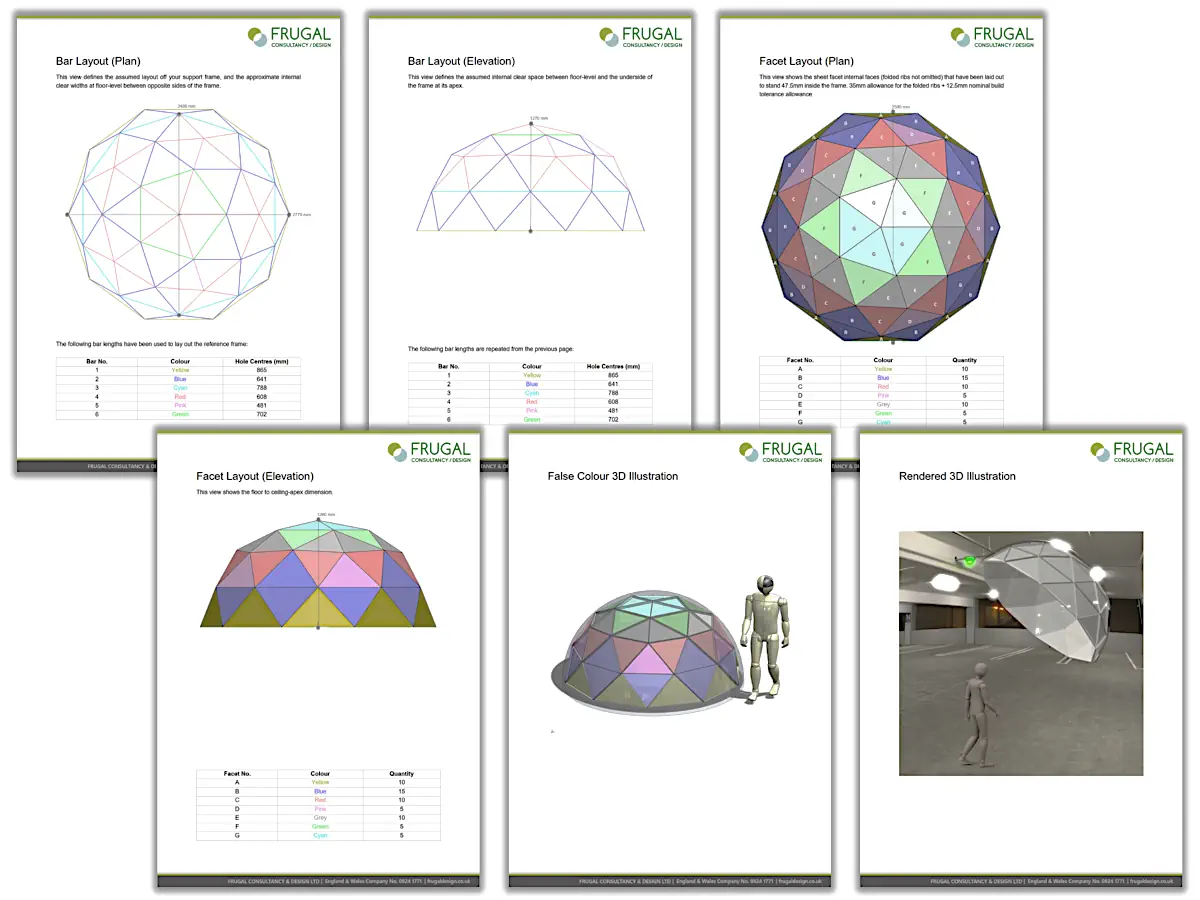
Interim report produced to confirm the developing design basis.
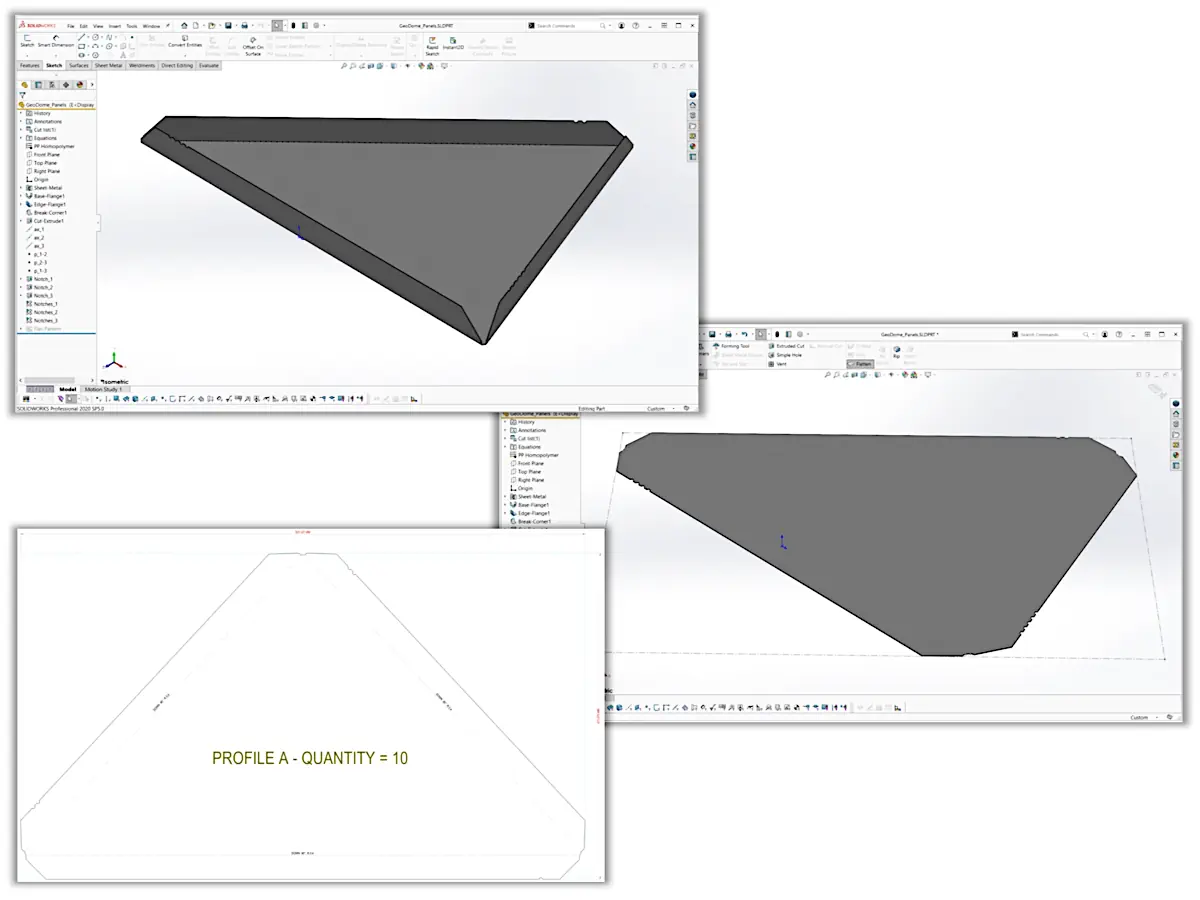
A folded-sheet facet model and its corresponding 1:1 cut profile.
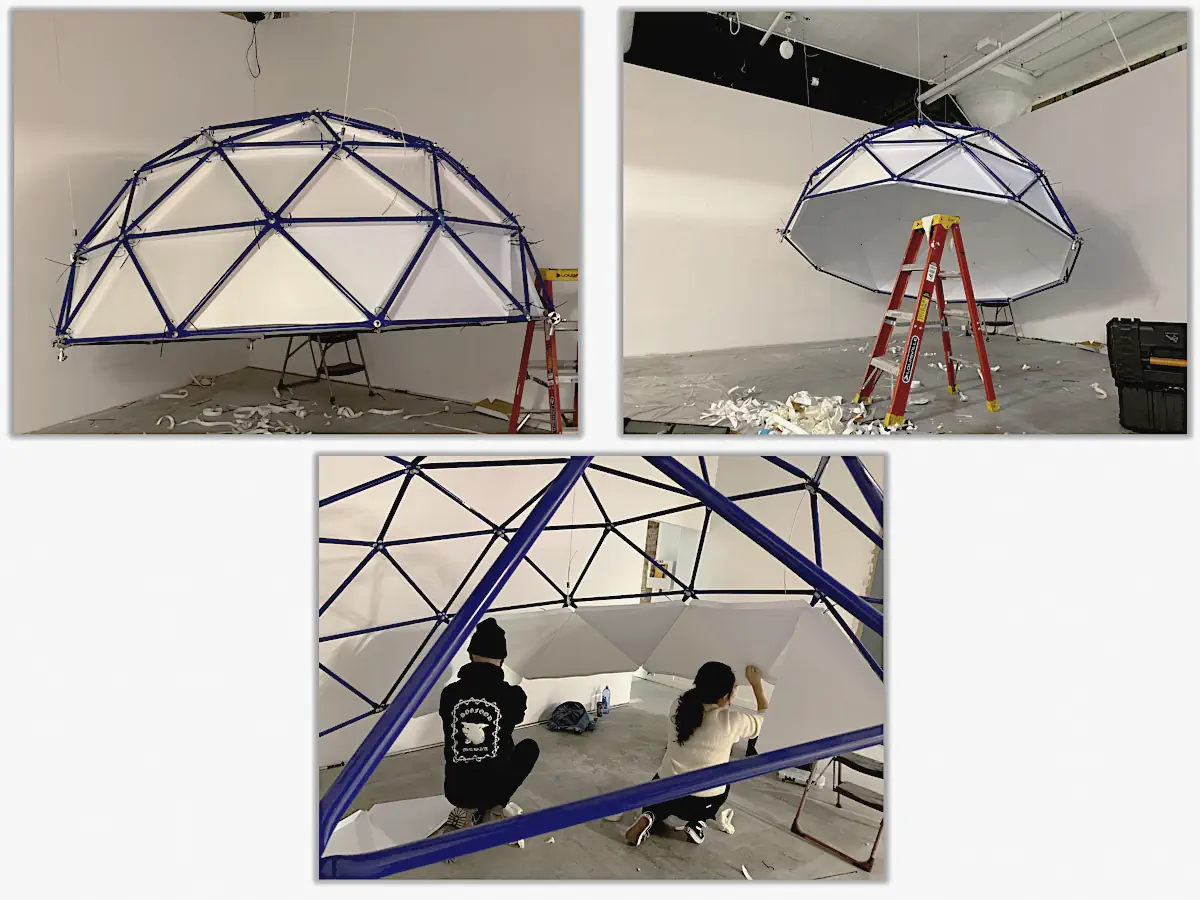
The completed screen assembled in Chicago, including one view during client-led assembly.
Outcome
What this enabled
Client feedback
“The measurements ended up working great. The deliverables were very professional, provided clear additional information, and exceeded expectations.”
Eddie Yang, CEO & Co-Founder
Visual Feeder, Chicago
Contact
If you need to solve a problem and you’d like to explore whether I can help, drop me an email:
What to include
To help me give you a useful reply, please mention…
- What you’re building or dealing with (one or two sentences)
- What’s going wrong, what decision you’re trying to make, or where the brief still feels unclear
- Key constraints (budget, timescale, materials, interfaces, standards)
- What information you already have (CAD, drawings, photos, etc)
- Desired outcome (e.g. clearer brief, options report, CAD, calcs, FEA)
- Any deadlines and why they exist (so I can reality-check them)
Attachments
Attachments are welcome:
- All enquiries and attachments are treated as confidential by default
- If attachments are over 2MB, please use a file-sharing service such as Dropbox or WeTransfer and include a download link.
What happens next?
I’ll usually reply with a quick fit-check…
If it's a fit, I will:
- Tell you whether and how I can help
- Give you some options for how we could move forward
- Ask for the minimum info needed to clarify and scope it
If it's not a fit, I will:
- Say so, and tell you why
- Suggest an alternative route, if appropriate