
Case Study
Fabricated steel silos: ongoing engineering support across design, review and live queries
Initially brought in for 3D CAD expertise, I went on to provide broader ongoing mechanical engineering input across drawing production, design review, manufacturability input, structural assessment, and live technical queries.
Retainer
Industrial manufacturing
Ongoing engineering input
Senior technical judgement
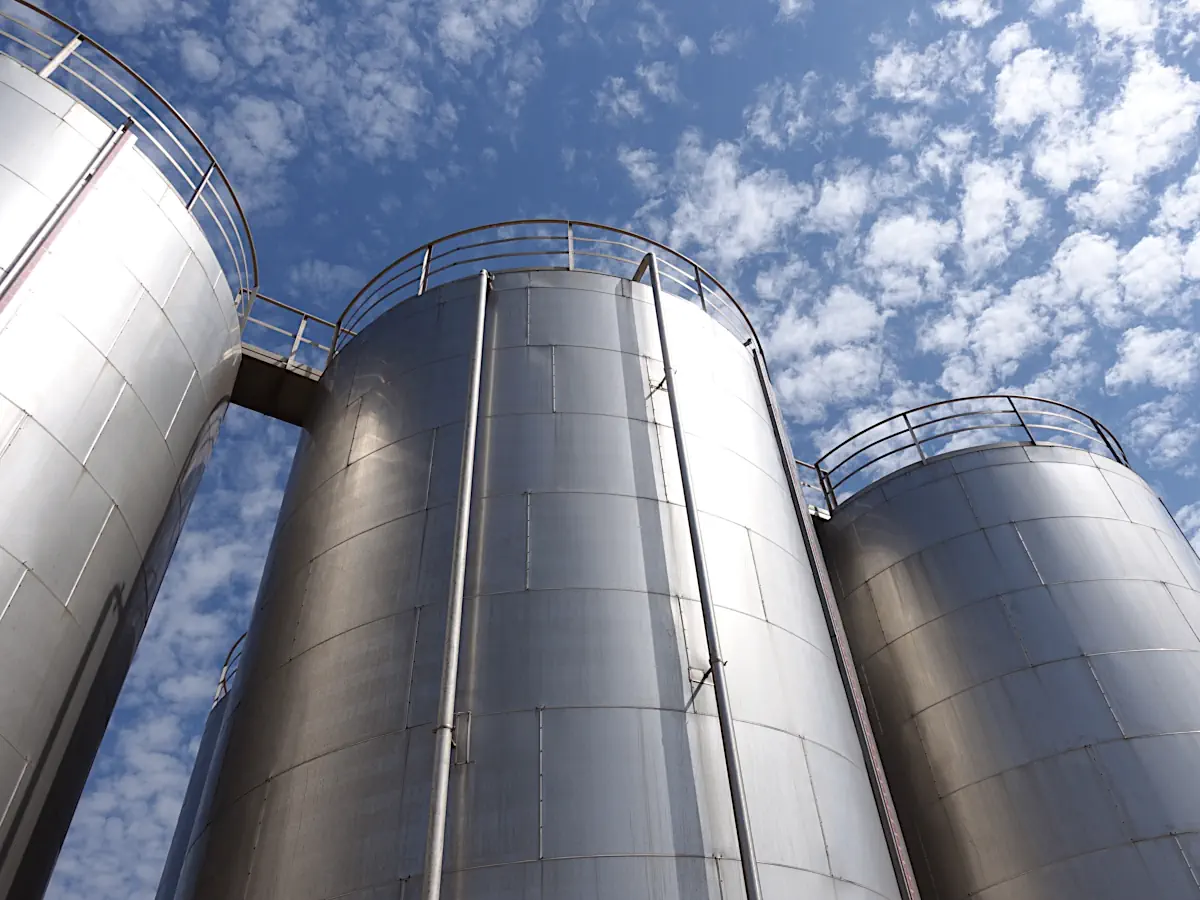
Typical example of a storage silo installation
Situation
The real problem
Constraints
-
Bespoke output: Advice and deliverables had to be matched to the project context, the intended reader’s technical level, and what was actually needed to move the issue forward.
-
Proportionality: Responses had to be practical and proportionate to live project needs, ranging from judgement calls to more structured drawings, mark-ups, calculations, or technical notes.
-
Minimised waste: Support had to be delivered efficiently and proportionately, so the monthly hours allowance was used where it added the most value.
Client:
Manufacturer of large fabricated steel silos
Role:
Mechanical engineering consultant
Period:
2023 - Present
Scope:
Engineering decision support +
Design review +
Small bounded technical tasks
Acceptance basis:
Client review + approval
against live project needs
Highlights
Improved the quality and usability of engineering output
- Simplified and rebuilt CAD so models were more practical to use, review, and build from
- Produced clearer drawing information and more dependable release material for manufacture
Added senior judgement across live project decisions
- Involved in design reviews, technical queries, and manufacturability questions as work evolved
- Helped resolve issues in context, rather than treating each one as a disconnected standalone task
Provided senior engineering oversight across changing needs
- Covered a mixed spread of review, delivery, and problem-solving work as priorities shifted
- Gave the client access to experienced engineering input without needing equivalent permanent in-house capacity
Spun larger defined tasks out into separate packages
- Where clearer, more bounded tasks emerged, these could be separately scoped and delivered outside the ongoing retainer arrangement
- This kept the retainer focused on judgement-led work, allowing bigger delivery tasks to be handled with clearer definition and control
Outcome
What this enabled
Business Perspective
The work was generally very well received, with regular positive feedback on the usefulness and quality of output, and the value of having a dependable senior engineering hand available as live issues arose.
Based on archived project emails
Contact
If you need to solve a problem and you’d like to explore whether I can help, drop me an email:
What to include
To help me give you a useful reply, please mention…
- What you’re building or dealing with (one or two sentences)
- What’s going wrong, what decision you’re trying to make, or where the brief still feels unclear
- Key constraints (budget, timescale, materials, interfaces, standards)
- What information you already have (CAD, drawings, photos, etc)
- Desired outcome (e.g. clearer brief, options report, CAD, calcs, FEA)
- Any deadlines and why they exist (so I can reality-check them)
Attachments
Attachments are welcome:
- All enquiries and attachments are treated as confidential by default
- If attachments are over 2MB, please use a file-sharing service such as Dropbox or WeTransfer and include a download link.
What happens next?
I’ll usually reply with a quick fit-check…
If it's a fit, I will:
- Tell you whether and how I can help
- Give you some options for how we could move forward
- Ask for the minimum info needed to clarify and scope it
If it's not a fit, I will:
- Say so, and tell you why
- Suggest an alternative route, if appropriate